Rheumatoid arthritis (RA) causes inflammatory joint pain, swelling and prolonged stiffness. It often affects joints symmetrically and may cause problems outside the joints.
Symmetric joint swelling
Rheumatoid arthritis is a chronic autoimmune disease that mainly affects joints but can also affect organs outside the joints.
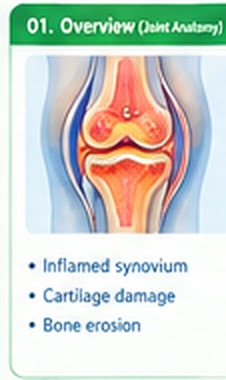
Rheumatoid arthritis (RA) causes inflammatory joint pain, swelling and prolonged stiffness. It often affects joints symmetrically and may cause problems outside the joints.
The immune system attacks joint tissues, producing inflammation that can damage cartilage, bone and supporting structures.
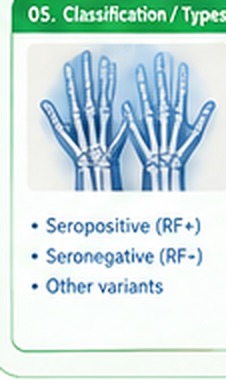
RA can be seropositive or seronegative based on autoantibodies and may vary in severity and organ involvement.
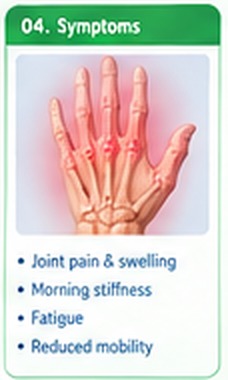
Symmetric joint swelling
Morning stiffness over 30 minutes
Joint pain and warmth
Fatigue
Low-grade fever
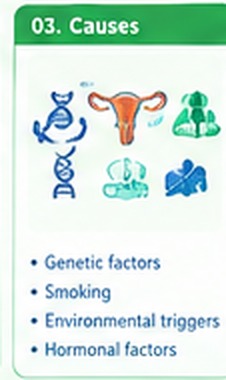
Exact cause is unknown. Genetic and environmental factors such as smoking contribute to risk.
Family history
Smoking
Female sex
Obesity
Certain environmental exposures
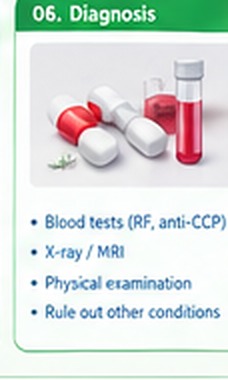
History, physical examination, RF and anti-CCP testing, inflammatory markers and imaging such as X-ray or ultrasound.
Joint examination
Functional and gait assessment
Skin, eye and lung assessment when indicated
Rheumatoid factor
Anti-CCP antibodies
CRP and ESR
CBC
X-rays
Musculoskeletal ultrasound
MRI in selected cases
Joint-fluid analysis when infection or gout is suspected
Pulmonary assessment when indicated
Osteoarthritis
Gout
Psoriatic arthritis
Viral arthritis
Lupus
RA is often described by disease activity and structural damage rather than a single universal stage system.
Staging or grading systems differ between diseases. The information here is educational and should be interpreted by a qualified healthcare professional in the context of the individual case.

DMARDs, biologic or targeted medicines, anti-inflammatory treatment, rehabilitation and selected surgery.
Methotrexate or other DMARDs
Biologic DMARDs
JAK inhibitors in selected patients
NSAIDs or corticosteroids for symptom control when prescribed
Medicines listed here are for educational information only. Do not start, stop, or change a medicine without professional medical advice.
Joint destruction, disability, osteoporosis, cardiovascular disease, lung disease and infection risk can occur.
Sudden severe swollen joint with fever
Chest pain or severe shortness of breath
Sudden neurological symptoms
If symptoms are severe, rapidly worsening, or life-threatening, seek emergency medical care immediately.

Early diagnosis and disease control can preserve function and reduce irreversible joint damage.
Survival statistics describe outcomes in groups of people and cannot predict exactly what will happen to one individual. Prognosis depends on factors such as cancer stage, tumor biology, treatment response, overall health, and follow-up.
RA affects adults worldwide and is more common in women; risk is influenced by genetics and smoking.
No guaranteed prevention exists, but smoking cessation and early treatment of inflammatory symptoms are important.
Could my joint symptoms be inflammatory arthritis?
Which DMARD is appropriate for me?
What monitoring tests do I need?
BimariDur provides educational health information to help people understand diseases, symptoms, tests, and treatment concepts. It does not replace examination, diagnosis, or treatment by a qualified healthcare professional.
Do not delay professional medical care because of information read on BimariDur.