PCOS can affect menstrual cycles, androgen-related symptoms, fertility and metabolic health. Not everyone has the same combination of features.
Irregular periods
PCOS is a hormonal and metabolic condition associated with irregular ovulation, higher androgen activity and characteristic ovarian findings in some people.
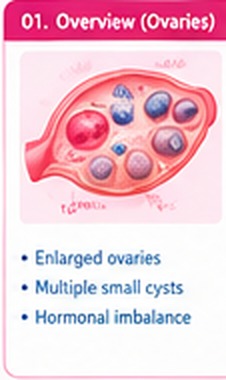
PCOS can affect menstrual cycles, androgen-related symptoms, fertility and metabolic health. Not everyone has the same combination of features.
Hormonal signaling and ovulation can become irregular, with increased androgen activity and metabolic changes in some people.
PCOS presentations vary by dominant features such as ovulatory dysfunction, androgen excess and metabolic abnormalities.
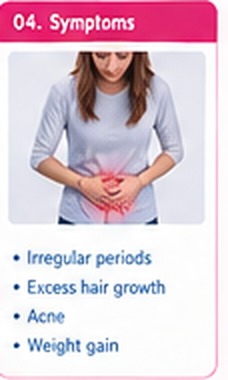
Irregular periods
Excess facial or body hair
Acne
Infertility
Weight or metabolic changes
Exact cause is unknown. Genetic and environmental factors contribute, with insulin resistance and androgen excess involved in many cases.
Family history
Insulin resistance
Overweight or obesity
Metabolic risk factors
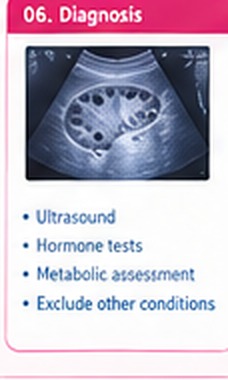
History, menstrual assessment, androgen testing when indicated, exclusion of alternative causes and selected pelvic ultrasound.
Menstrual history
Blood pressure and weight assessment
Signs of androgen excess
Total/free testosterone when indicated
Glucose or HbA1c
Lipid profile
TSH or prolactin when clinically indicated
Pelvic ultrasound when indicated
Pregnancy test when appropriate
Evaluation for other endocrine causes
Thyroid disease
Hyperprolactinemia
Nonclassic congenital adrenal hyperplasia
Cushing syndrome

PCOS is not staged like cancer. Severity is described by symptoms, reproductive goals and metabolic risk.
Staging or grading systems differ between diseases. The information here is educational and should be interpreted by a qualified healthcare professional in the context of the individual case.
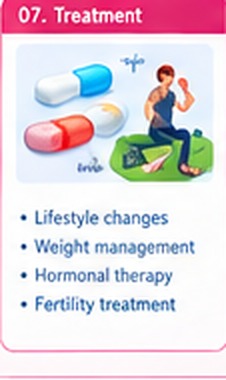
Lifestyle measures, cycle regulation, anti-androgen treatment, insulin-sensitizing medicines and fertility treatments are selected according to goals.
Metformin in selected patients
Combined oral contraceptives when appropriate
Anti-androgen medicines when appropriate
Ovulation-induction medicines for fertility
Medicines listed here are for educational information only. Do not start, stop, or change a medicine without professional medical advice.
Infertility, metabolic disease, type 2 diabetes risk, sleep apnea and endometrial problems can occur.
Very heavy vaginal bleeding with dizziness or fainting
Severe pelvic pain with acute illness
Pregnancy-related emergency symptoms
If symptoms are severe, rapidly worsening, or life-threatening, seek emergency medical care immediately.
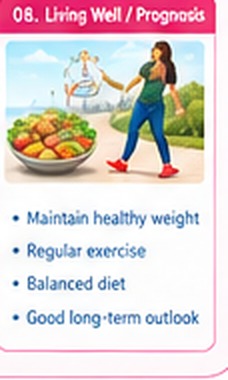
Symptoms can be managed over time. Metabolic and reproductive risks require ongoing care.
Survival statistics describe outcomes in groups of people and cannot predict exactly what will happen to one individual. Prognosis depends on factors such as cancer stage, tumor biology, treatment response, overall health, and follow-up.
PCOS is one of the common endocrine conditions affecting reproductive-age women; estimates vary by diagnostic criteria.
There is no guaranteed prevention, but healthy activity, metabolic health and timely evaluation can reduce complications.
Which diagnostic criteria apply to me?
Should I have glucose and cholesterol testing?
What treatment fits my fertility plans?
BimariDur provides educational health information to help people understand diseases, symptoms, tests, and treatment concepts. It does not replace examination, diagnosis, or treatment by a qualified healthcare professional.
Do not delay professional medical care because of information read on BimariDur.