Peptic ulcers can cause upper-abdominal pain and indigestion and may bleed or perforate. Helicobacter pylori infection and NSAID medicines are common causes.
Upper-abdominal pain
A peptic ulcer is a sore in the lining of the stomach or duodenum.
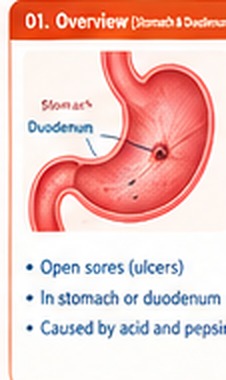
Peptic ulcers can cause upper-abdominal pain and indigestion and may bleed or perforate. Helicobacter pylori infection and NSAID medicines are common causes.
Damage to the protective lining allows acid and digestive factors to produce an ulcer crater.
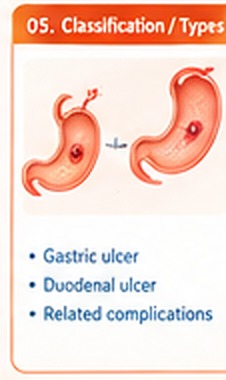
Common forms are gastric ulcer and duodenal ulcer. Ulcers may also be classified by cause such as H. pylori or NSAID-related.
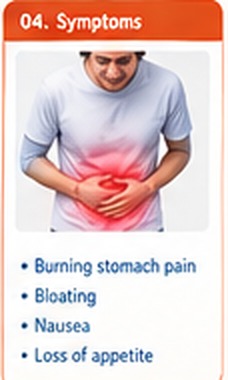
Upper-abdominal pain
Nausea
Bloating
Early fullness
Vomiting
Black or bloody stool if bleeding occurs
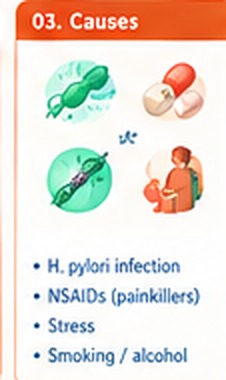
H. pylori infection and NSAID use are the most common causes. Less common causes include severe illness and other diseases.
Previous ulcer
Long-term or high-dose NSAID use
H. pylori infection
Smoking
Older age or interacting medicines
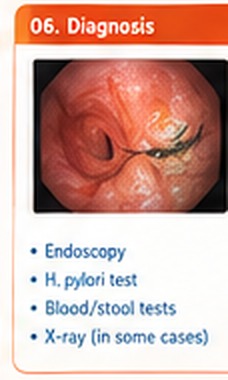
H. pylori tests, blood or stool tests when appropriate, urea breath testing, upper GI endoscopy and selected imaging.
Abdominal examination
Review of NSAID and aspirin use
Assessment for bleeding
H. pylori stool testing
CBC for anemia when bleeding is suspected
Selected H. pylori blood tests
Upper GI endoscopy
Upper GI series when appropriate
Urea breath test
Endoscopic biopsy testing for H. pylori
Gastritis
GERD
Gallbladder disease
Pancreatic disease
Functional dyspepsia
Peptic ulcers are not usually staged like cancer. Clinical assessment focuses on active ulcer, healing and complications.
Staging or grading systems differ between diseases. The information here is educational and should be interpreted by a qualified healthcare professional in the context of the individual case.
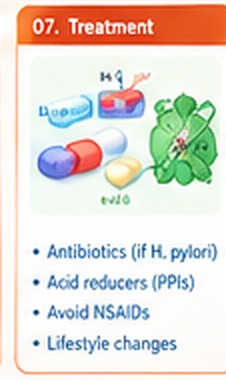
PPIs or other acid-suppressing medicines; combination antibiotics for H. pylori; management of NSAIDs; endoscopic or surgical treatment for complications.
Proton pump inhibitor
H2 blocker in selected cases
Combination antibiotics for confirmed H. pylori
Bismuth in selected eradication regimens
Medicines listed here are for educational information only. Do not start, stop, or change a medicine without professional medical advice.
Bleeding, perforation, penetration and gastric outlet obstruction can occur.
Vomiting blood or coffee-ground material
Black or maroon stool
Sudden severe persistent abdominal pain
Fainting or shock symptoms
If symptoms are severe, rapidly worsening, or life-threatening, seek emergency medical care immediately.
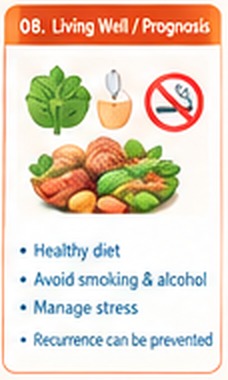
Most ulcers heal with appropriate treatment. Recurrence is more likely if H. pylori or ulcer-causing medicines are not addressed.
Survival statistics describe outcomes in groups of people and cannot predict exactly what will happen to one individual. Prognosis depends on factors such as cancer stage, tumor biology, treatment response, overall health, and follow-up.
Peptic ulcer disease remains common worldwide and is influenced by H. pylori, NSAID use and other medical factors.
Avoid unnecessary NSAIDs, do not smoke, use prescribed gastroprotection when indicated and eradicate confirmed H. pylori.
Should I be tested for H. pylori?
Can I continue my NSAID or aspirin?
Do I need an endoscopy?
BimariDur provides educational health information to help people understand diseases, symptoms, tests, and treatment concepts. It does not replace examination, diagnosis, or treatment by a qualified healthcare professional.
Do not delay professional medical care because of information read on BimariDur.