Osteoarthritis (OA) is the most common type of arthritis. It often affects the knees, hips, hands, neck and lower back and develops gradually.
Joint pain with activity
Osteoarthritis is a joint disorder in which joint tissues gradually change and can cause pain, stiffness and reduced movement.
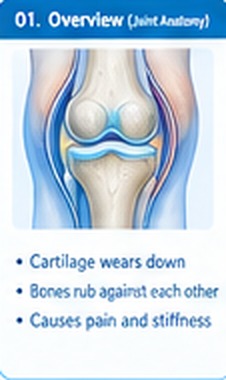
Osteoarthritis (OA) is the most common type of arthritis. It often affects the knees, hips, hands, neck and lower back and develops gradually.
Joint tissues break down and remodel over time. Cartilage can become thinner, while bone and other joint structures change and may develop osteophytes.
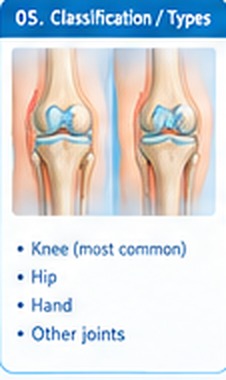
OA may be classified by affected joint and by whether it is primary or secondary to another condition or injury.
Joint pain with activity
Stiffness after rest
Swelling
Reduced movement
Grinding or creaking
Joint aging and tissue changes; previous injury; abnormal joint structure; repetitive loading; genetic and metabolic factors.
Older age
Overweight or obesity
Previous joint injury
Family history
Occupational joint stress
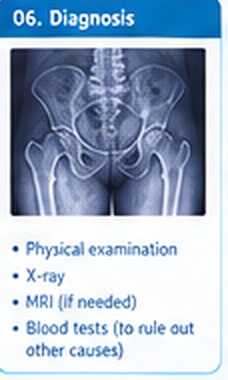
History, joint examination and selected X-rays or MRI. Blood tests or joint-fluid analysis may help rule out other causes.
Joint tenderness and range of motion
Gait and functional assessment
Joint stability assessment
CBC when clinically indicated
Inflammatory markers when another diagnosis is suspected
X-ray
MRI when soft-tissue assessment is needed
Joint-fluid analysis when gout or infection is suspected
Rheumatoid arthritis
Gout
Septic arthritis
Bursitis or tendon disorders
OA severity is described clinically by symptoms, function and structural changes rather than a single universal stage system.
Staging or grading systems differ between diseases. The information here is educational and should be interpreted by a qualified healthcare professional in the context of the individual case.
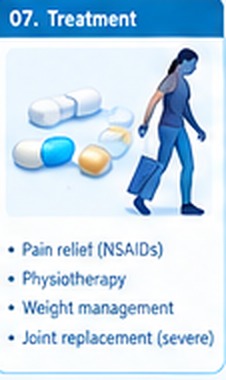
Exercise, weight management when appropriate, physical therapy, assistive devices, topical or oral medicines and selected injections or surgery.
Topical NSAID when appropriate
Oral pain-relieving or anti-inflammatory medicines when prescribed
Selected intra-articular corticosteroid injections
Medicines listed here are for educational information only. Do not start, stop, or change a medicine without professional medical advice.
Persistent pain, reduced mobility, sleep disturbance, weakness, falls or disability may occur in advanced disease.
Sudden hot swollen joint with fever
Inability to bear weight after significant injury
Severe sudden joint pain with systemic illness
If symptoms are severe, rapidly worsening, or life-threatening, seek emergency medical care immediately.

Symptoms can fluctuate and progress at different rates. Many people maintain useful function with individualized management.
Survival statistics describe outcomes in groups of people and cannot predict exactly what will happen to one individual. Prognosis depends on factors such as cancer stage, tumor biology, treatment response, overall health, and follow-up.
OA becomes more common with age and is influenced by previous joint injury, body weight, sex, occupation and genetics.
Reduce injury risk, maintain healthy weight, strengthen supporting muscles and address joint problems early.
Which exercise is safe for my joint?
Do I need an X-ray or MRI?
When should surgery be considered?
BimariDur provides educational health information to help people understand diseases, symptoms, tests, and treatment concepts. It does not replace examination, diagnosis, or treatment by a qualified healthcare professional.
Do not delay professional medical care because of information read on BimariDur.