BIMARIDUR HEALTH ENCYCLOPEDIA

Oral Cavity Cancer (Mouth Cancer)

Oral cavity cancer is a malignant tumor arising in the tissues of the mouth. Most oral cavity cancers are squamous cell carcinomas and can involve the lips, tongue, gums, inner cheeks, floor of the mouth or other oral structures.

Oral Cavity Cancer (Mouth Cancer) anatomy
ICDC06.9
Affected areaLips, tongue, gums, inner cheeks, floor of the mouth, hard palate and nearby tissues; advanced disease may involve regional lymph nodes or distant organs.
ContagiousnessNon-contagious
01 • QUICK UNDERSTANDING

What is Oral Cavity Cancer (Mouth Cancer)?

Oral cavity cancer develops when cells lining the mouth acquire changes that allow abnormal, uncontrolled growth. The tumor may remain localized, invade nearby tissues, involve regional lymph nodes, or spread to distant parts of the body.
02 • BODY & MECHANISM

What happens in the body?

Oral Cavity Cancer (Mouth Cancer) anatomy illustration

Body structure involved

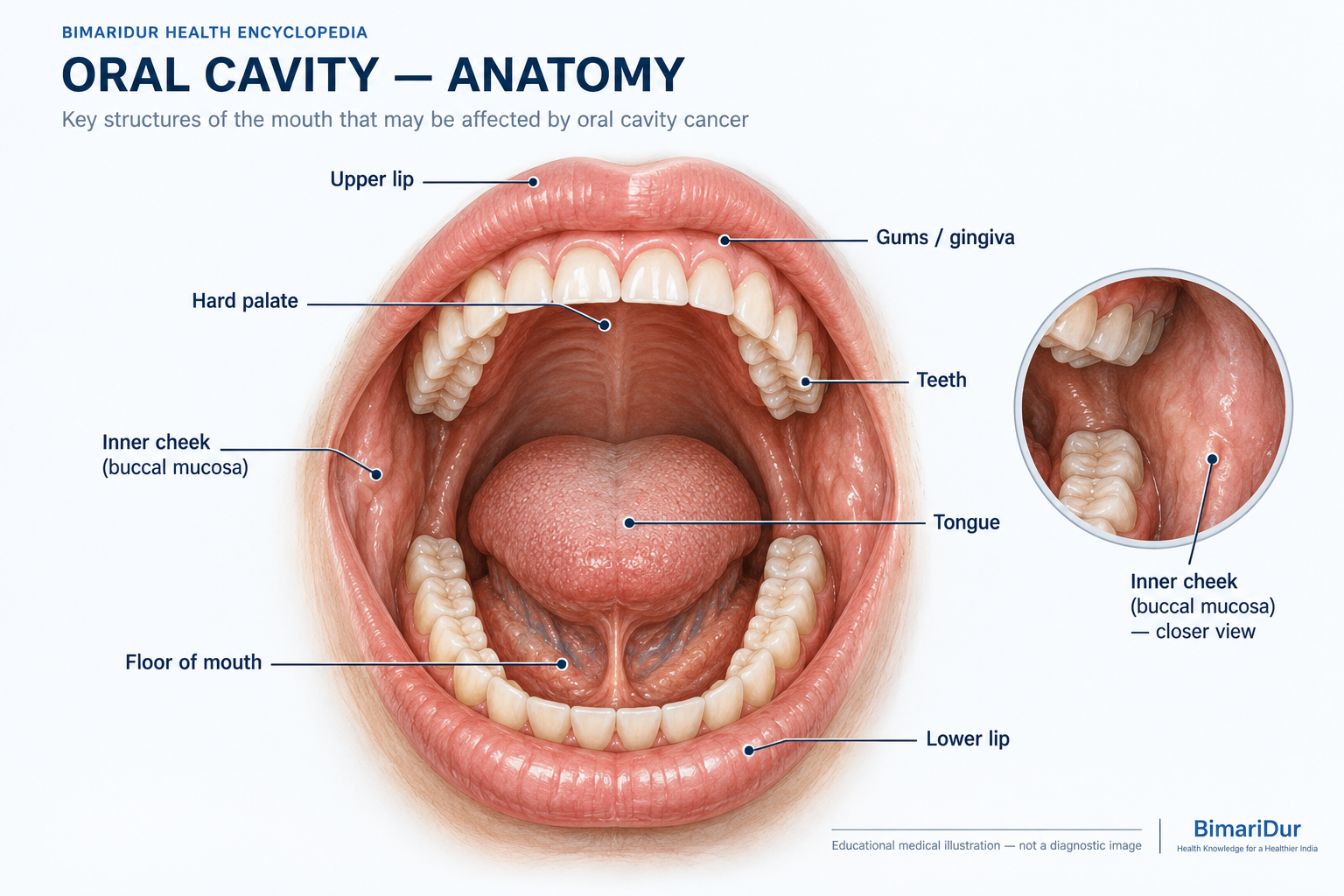
The oral cavity includes the lips, inner cheeks, gums, teeth-bearing tissues, tongue, floor of the mouth and hard palate. These structures contain mucosal lining, connective tissue, muscles, nerves and blood vessels.

How it starts

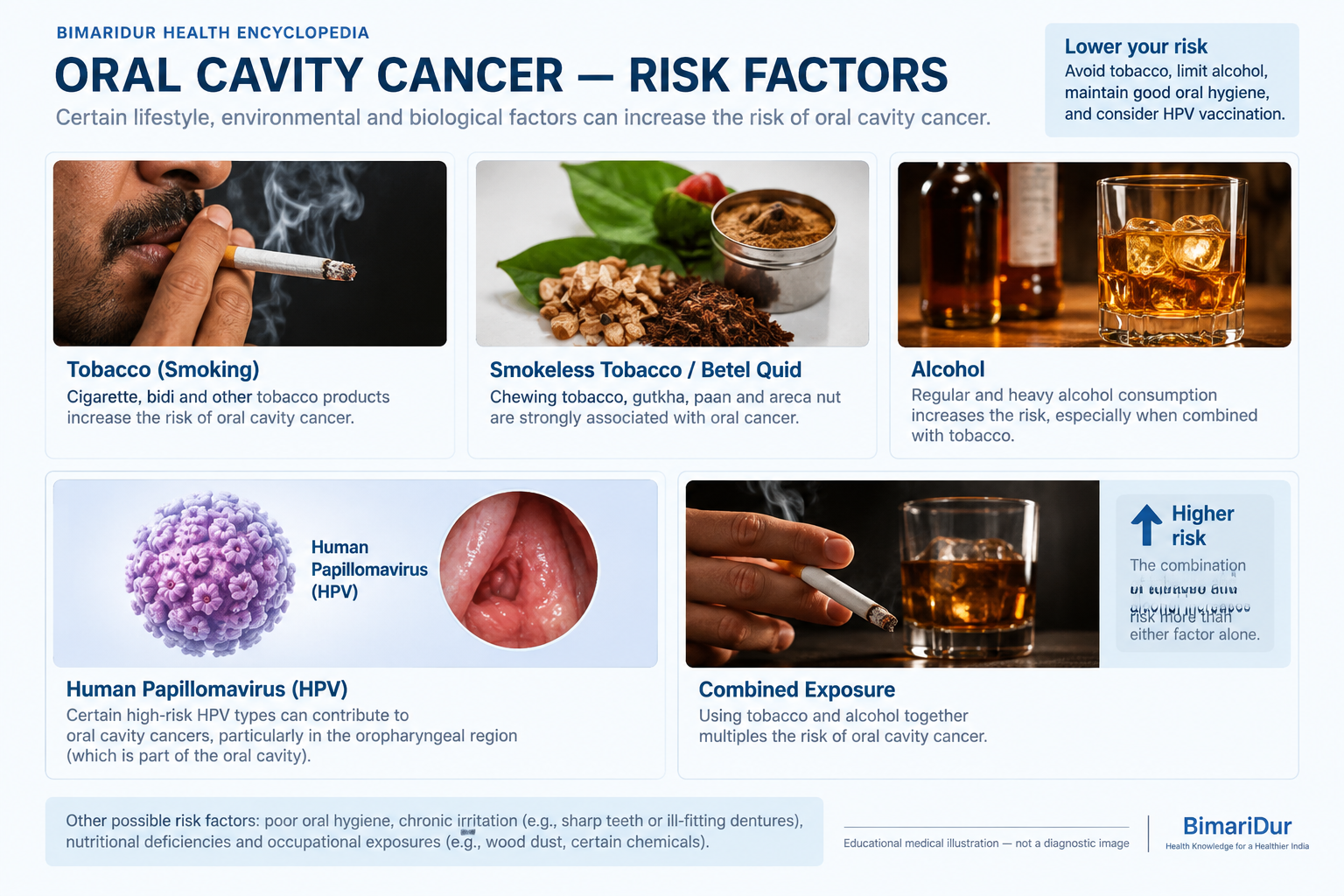
Most oral cavity cancers begin as squamous cell carcinomas arising from the surface lining. Long-term exposure to tobacco, alcohol, certain HPV infections and other risk factors can contribute to cellular changes.

What happens inside the body

Cancer usually begins in the mucosal lining of the oral cavity. Abnormal cells multiply without normal control, forming a lesion that can invade deeper tissues and, through lymphatic or blood vessels, spread beyond the original site.

03 • TYPES & CLASSIFICATION

Types and classification

Oral Cavity Cancer (Mouth Cancer) classification

Classification is based on the microscopic appearance of the tumor and, when relevant, additional pathological or molecular findings. Tumor location and TNM stage are also important for treatment planning.

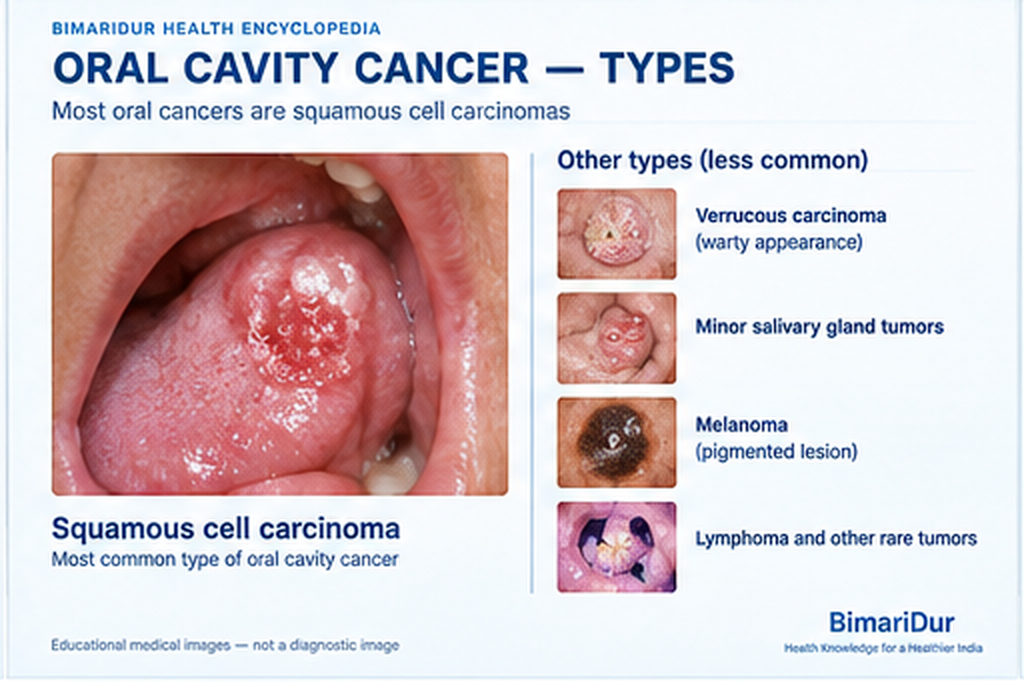
Most oral cavity cancers are squamous cell carcinomas. Less common tumors include verrucous carcinoma, minor salivary gland tumors, melanoma, lymphoma and other rare malignancies.

04 • SYMPTOMS

Symptoms and warning signs

Oral Cavity Cancer (Mouth Cancer) symptoms

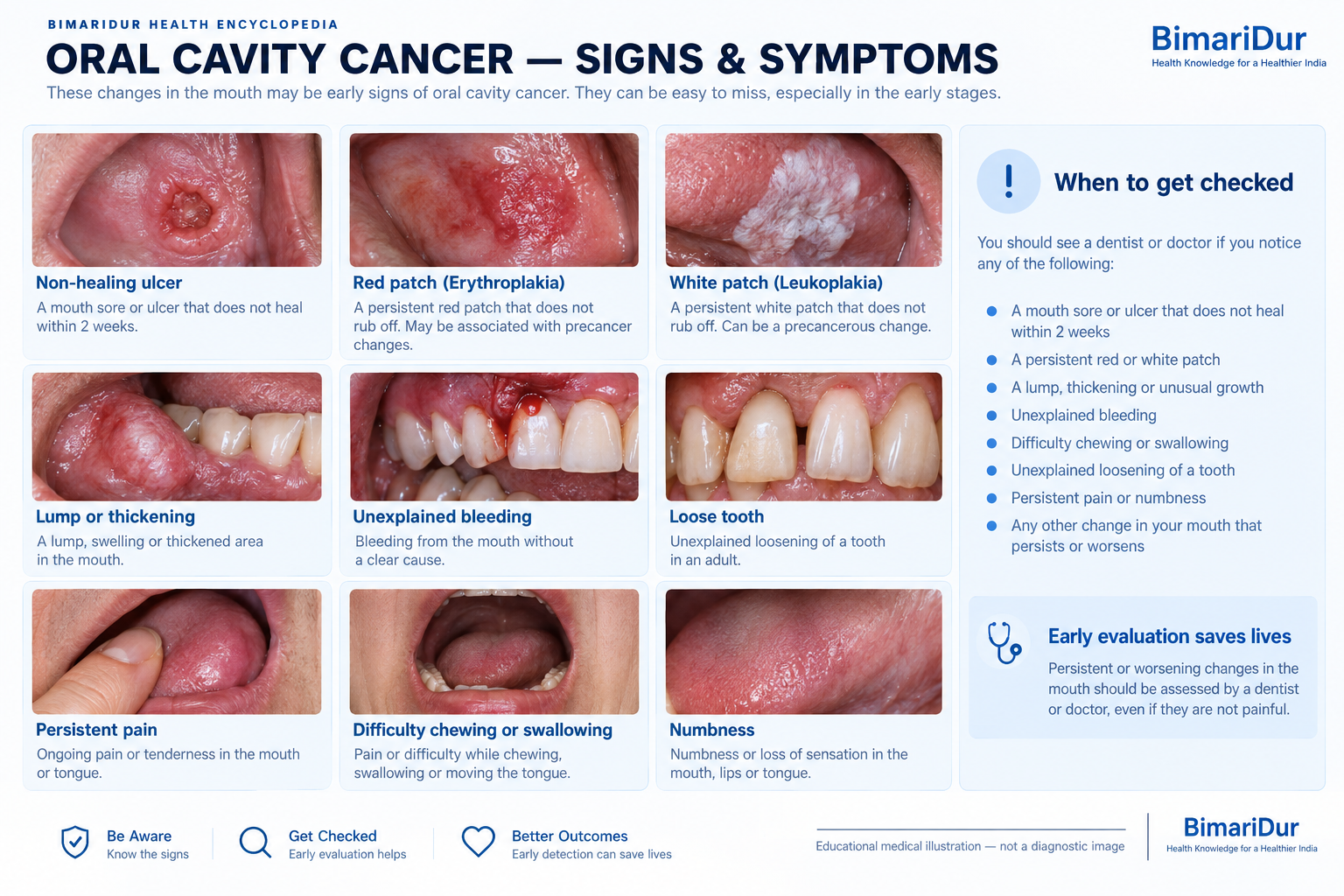
Mouth ulcer that does not heal

Persistent red or white patch

Persistent mouth pain

Unexplained bleeding

Lump or thickening in the mouth

Difficulty chewing or swallowing

Difficulty opening the mouth

Persistent hoarseness or throat discomfort

Numbness in the mouth or lip

Unexplained tooth loosening

Neck swelling

05 • LESS OBVIOUS SIGNS

Signs that may be easy to miss

Early oral cancer may cause few symptoms. A persistent ulcer, red or white patch, subtle thickening, unexplained numbness, a change in chewing or swallowing, or a lesion that does not heal should be assessed rather than assumed to be harmless.

06 • CAUSES

What can cause this disease?

Oral Cavity Cancer (Mouth Cancer) causes

There is no single cause. Major contributors include tobacco exposure, heavy alcohol use, certain high-risk HPV infections and other environmental or individual risk factors. Risk can also be influenced by age and previous oral lesions.

07 • RISK FACTORS

Who may have a higher risk?

1

Current or previous tobacco smoking

2

Smokeless tobacco or areca-nut exposure

3

Heavy or long-term alcohol use

4

Certain high-risk HPV infections

5

Increasing age

6

Previous oral potentially malignant lesions

7

Poor oral health and selected environmental exposures

08 • DIAGNOSIS

How is Oral Cavity Cancer (Mouth Cancer) diagnosed?

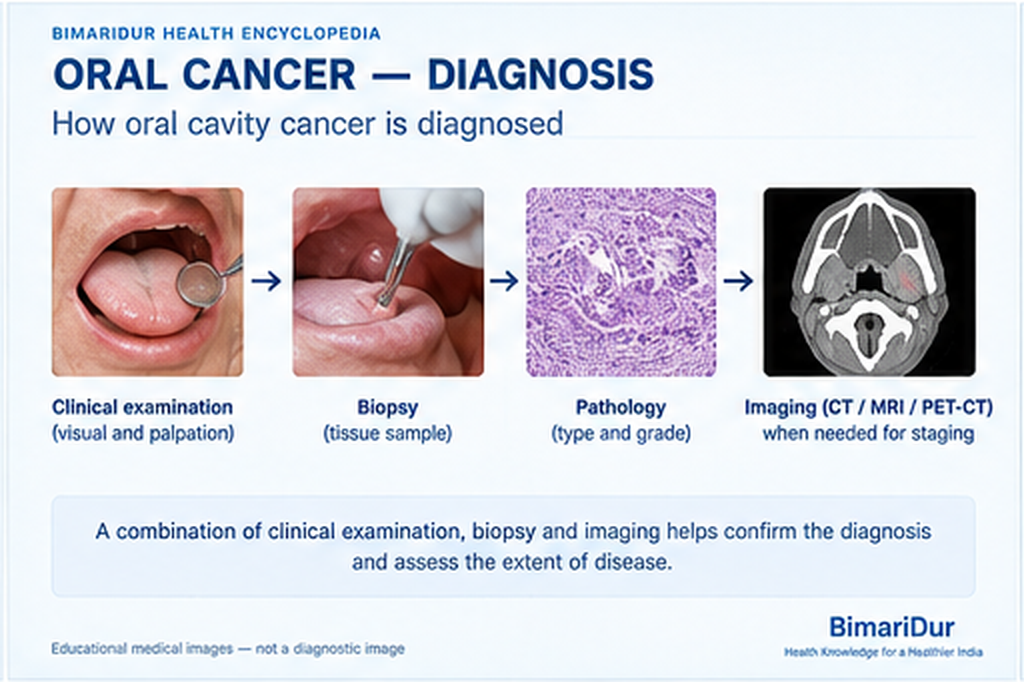
Oral Cavity Cancer (Mouth Cancer) diagnosis pathway

Diagnosis begins with history and examination of the mouth and neck. A suspicious lesion is commonly evaluated with biopsy so tissue can be examined by a pathologist. Imaging such as CT, MRI or PET/CT may be used to assess local extension, lymph nodes or distant spread when clinically indicated.

Clinical evaluation

Persistent oral ulcer or lesion

Red or white mucosal patch

Firmness or thickening

Unexplained bleeding

Restricted mouth opening

Neck lymph-node swelling

Laboratory tests

Routine blood tests when clinically indicated

Pathology examination of biopsy tissue

Selected molecular or biomarker testing when clinically appropriate

Imaging and scans

CT of the head and neck

MRI of the oral cavity and neck

PET/CT when indicated for advanced or uncertain disease

Chest or other imaging when clinically indicated

Special or confirmatory tests

Oral examination

Incisional or excisional biopsy

Pathology and histologic assessment

Neck evaluation and lymph-node assessment

09 • DIFFERENTIAL CONTEXT

Conditions that may look similar

Traumatic mouth ulcer

Aphthous ulcer

Oral fungal infection

Oral lichen planus

Leukoplakia or erythroplakia

Inflammatory or infectious lesions

10 • EXTENT / STAGE

Stages or severity

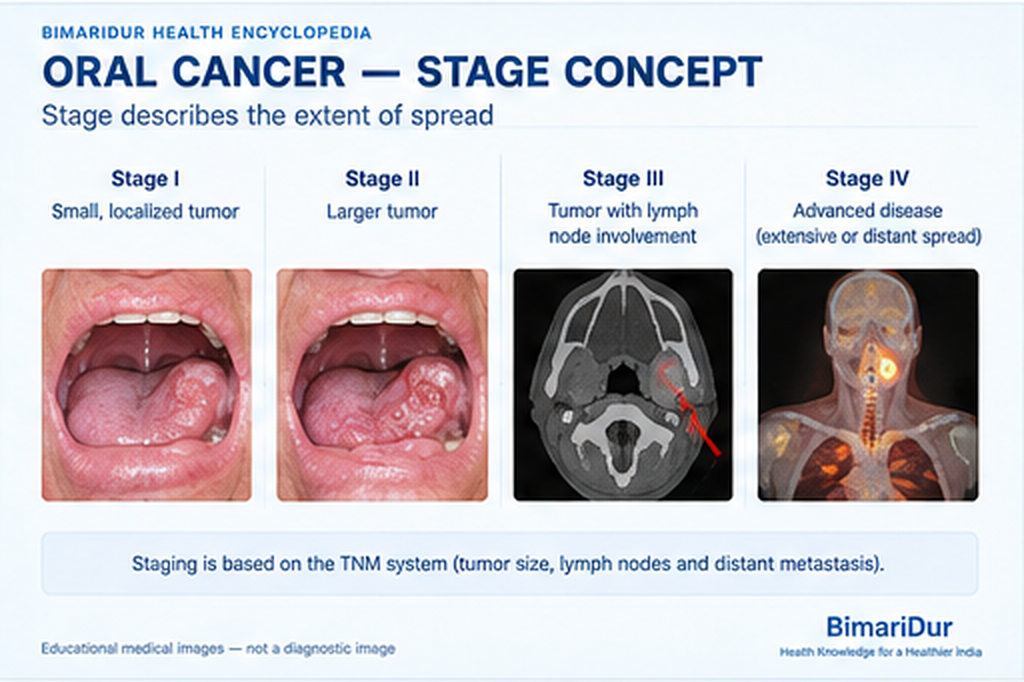
Oral Cavity Cancer (Mouth Cancer) stages

Oral cavity cancer is commonly staged using the TNM system. Staging considers the size and local invasion of the primary tumor, regional lymph-node involvement and distant metastasis. The resulting stage helps guide treatment and prognosis.

Important:

Staging or grading systems differ between diseases. The information here is educational and should be interpreted by a qualified healthcare professional in the context of the individual case.

11 • TREATMENT

How is Oral Cavity Cancer (Mouth Cancer) treated?

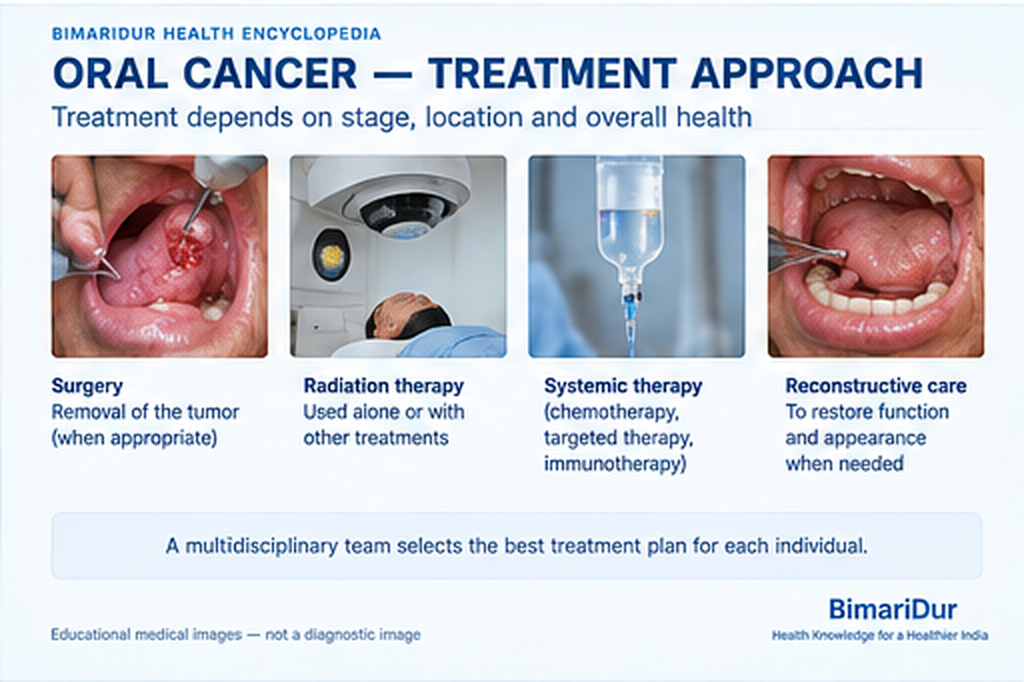
Oral Cavity Cancer (Mouth Cancer) treatment

Treatment depends on tumor location, stage, pathology, overall health and patient goals. Surgery is an important treatment for many localized cancers. Radiation therapy and systemic treatments such as chemotherapy, targeted therapy or immunotherapy may be used in selected situations, often in combination.

Medicines that may be used

Cancer medicines are selected according to tumor type, stage, pathology and treatment plan.

Chemotherapy, targeted therapy or immunotherapy may be used in selected patients.

Supportive medicines may be used for pain, nausea, infection or other treatment-related symptoms.

Medicine safety:

Medicines listed here are for educational information only. Do not start, stop, or change a medicine without professional medical advice.

12 • COMPLICATIONS

Possible complications

Possible complications include pain, bleeding, difficulty chewing or swallowing, nutritional problems, infection, speech difficulties, airway problems in advanced disease, lymph-node or distant spread, and treatment-related effects such as tissue damage or functional changes.

URGENT SAFETY INFORMATION

When should urgent medical help be considered?

Severe difficulty breathing

Rapidly worsening swelling affecting the airway

Heavy or uncontrolled bleeding

Inability to swallow fluids with signs of dehydration

Sudden severe weakness or collapse

If symptoms are severe, rapidly worsening, or life-threatening, seek emergency medical care immediately.

13 • OUTLOOK

Prognosis and recovery outlook

Oral Cavity Cancer (Mouth Cancer) prognosis

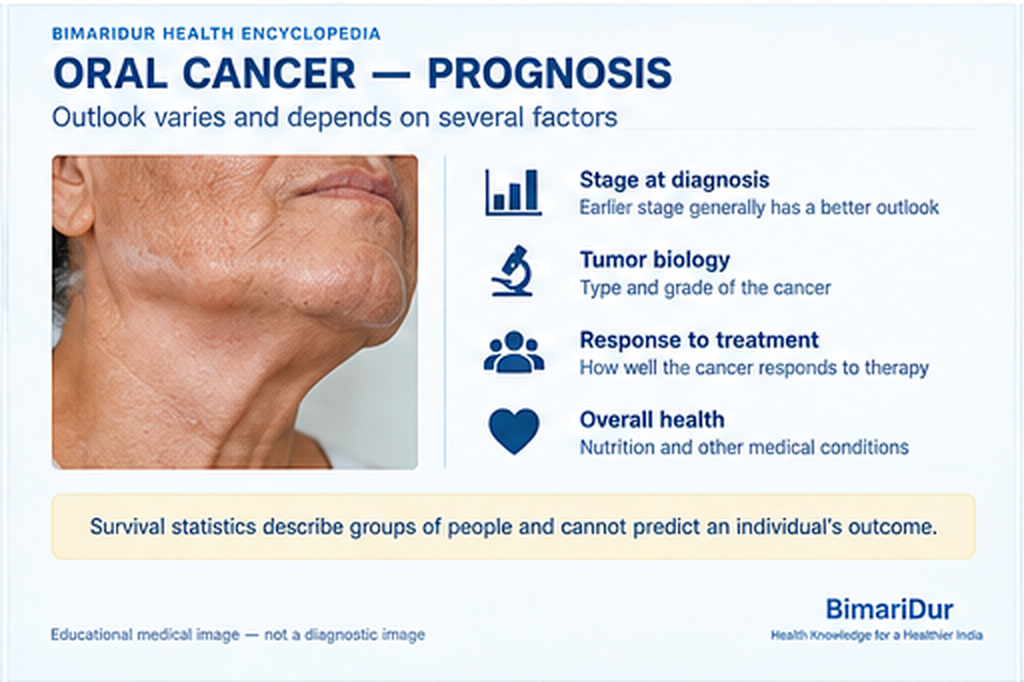
Outlook varies between individuals. Important factors include stage and spread, tumor size and location, lymph-node involvement, pathological features, treatment response, recurrence risk and overall health. Population survival statistics describe groups and cannot predict exactly what will happen to one person.

How to interpret these statistics

Survival statistics describe outcomes in groups of people and cannot predict exactly what will happen to one individual. Prognosis depends on factors such as cancer stage, tumor biology, treatment response, overall health, and follow-up.

14 • EPIDEMIOLOGY

How common is it?

Oral cavity and lip cancers are an important cancer burden in India and globally. The burden varies by sex, age, geography, tobacco exposure, alcohol use and other risk factors. Current cancer-registry and IARC estimates should be used for national statistics.

15 • PREVENTION

Risk reduction and prevention

Risk reduction includes avoiding tobacco, limiting alcohol, maintaining good oral health, attending appropriate dental examinations and discussing persistent oral lesions promptly with a healthcare professional. HPV vaccination can reduce risk from HPV-related cancers.

16 • PREPARE FOR YOUR VISIT

Questions you may ask your doctor

1

What type of oral cavity cancer is present?

2

What is the TNM stage?

3

Has the cancer spread to lymph nodes?

4

What treatment options are appropriate?

5

Will surgery affect speech, chewing or swallowing?

6

Will radiation or systemic treatment be needed?

7

What symptoms should prompt urgent medical attention?

Important medical information

BimariDur provides educational health information to help people understand diseases, symptoms, tests, and treatment concepts. It does not replace examination, diagnosis, or treatment by a qualified healthcare professional.

Do not delay professional medical care because of information read on BimariDur.