BIMARIDUR HEALTH ENCYCLOPEDIA

Multiple Sclerosis

Multiple sclerosis (MS) is a chronic disease of the central nervous system in which abnormal immune activity damages myelin and nerve fibers in the brain, spinal cord and optic nerves.

Multiple Sclerosis anatomy
ICDG35
Affected areaBrain, spinal cord, optic nerves and other parts of the central nervous system
ContagiousnessNot contagious and cannot spread from person to person.
01 • QUICK UNDERSTANDING

What is Multiple Sclerosis?

Multiple sclerosis is a chronic neurological disease affecting the central nervous system. It can cause episodes of neurological dysfunction and, in some people, progressive disability over time. Disease course varies considerably between individuals.
02 • BODY & MECHANISM

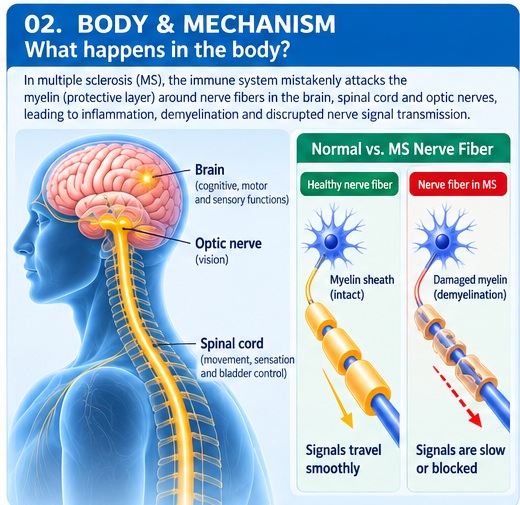
What happens in the body?

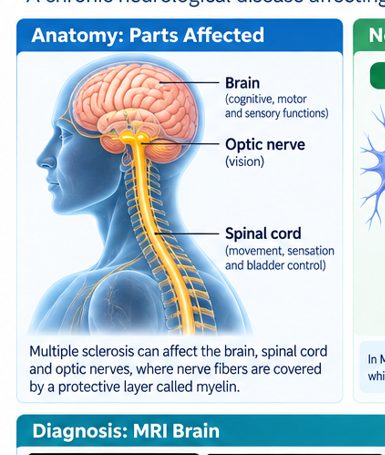
Multiple Sclerosis anatomy illustration

Body structure involved

The central nervous system consists of the brain and spinal cord. Optic nerves are also commonly affected in MS. Myelin normally surrounds many nerve fibers and helps electrical signals travel efficiently.

How it starts

MS develops through a combination of immune, genetic and environmental susceptibility. Abnormal immune activity targets components of the central nervous system and can produce inflammatory lesions.

What happens inside the body

The immune system attacks components of the central nervous system, causing inflammation and damage to myelin and sometimes the underlying nerve fibers. Repeated or persistent injury can interfere with nerve signaling and cause neurological symptoms.

03 • TYPES & CLASSIFICATION

Types and classification

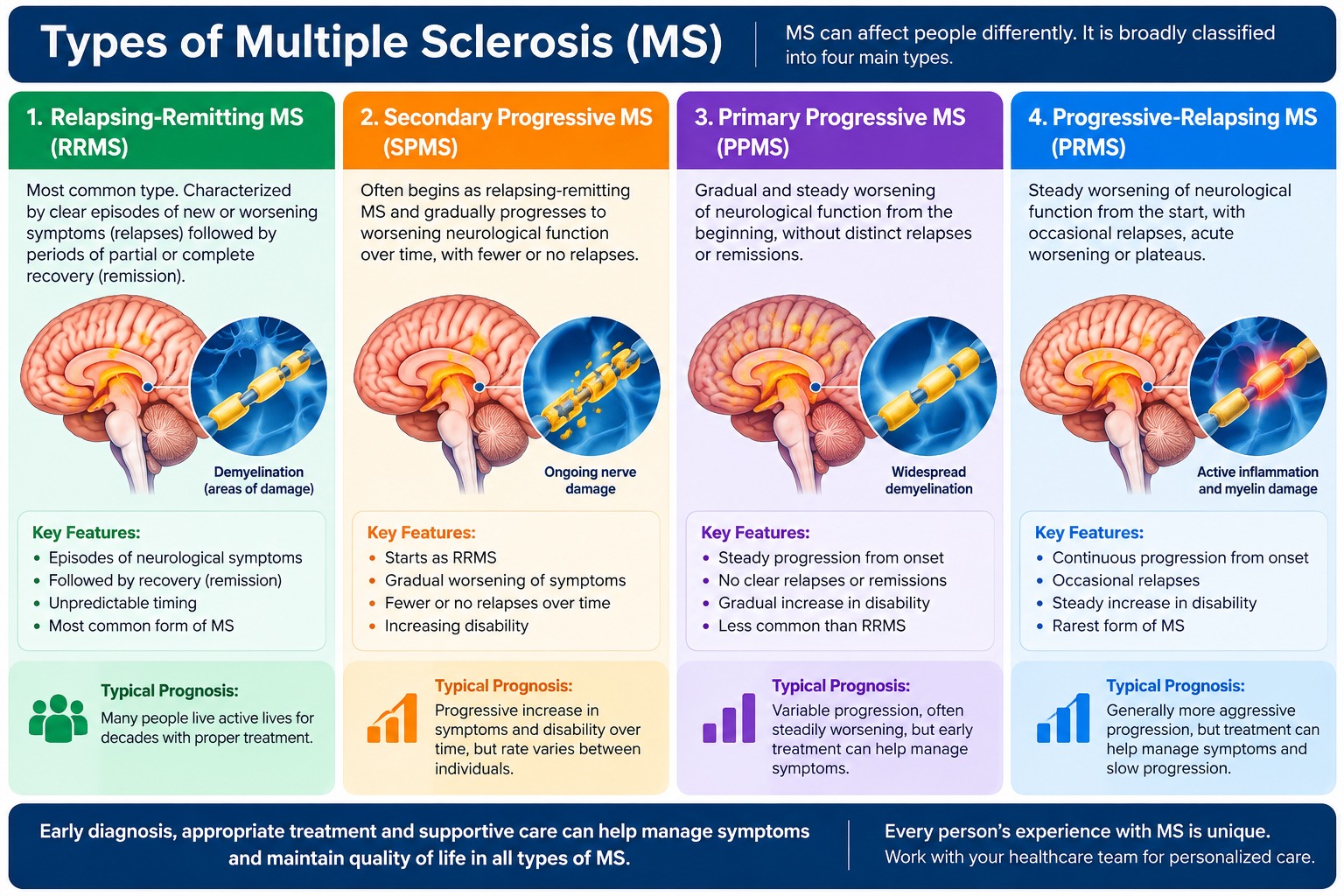
Multiple Sclerosis classification

MS is commonly described by clinical course, including clinically isolated syndrome, relapsing-remitting MS, secondary progressive MS and primary progressive MS. Disease activity and progression are also considered when describing individual patients.

Clinical courses include relapsing-remitting MS, secondary progressive MS and primary progressive MS. Some people initially present with a clinically isolated syndrome that may or may not later meet criteria for MS.

04 • SYMPTOMS

Symptoms and warning signs

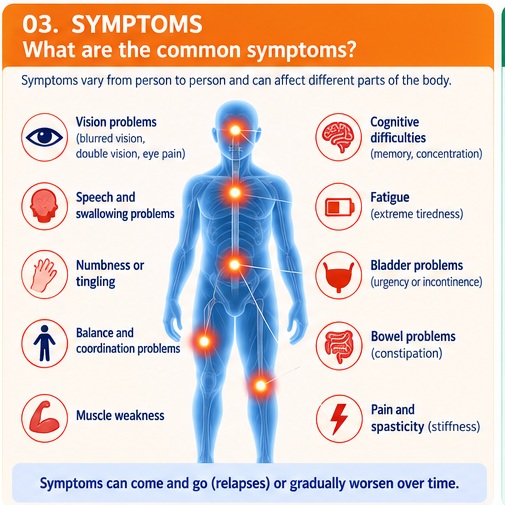
Multiple Sclerosis symptoms

Blurred or reduced vision

Pain with eye movement

Numbness or tingling

Muscle weakness

Balance or walking difficulty

Dizziness or vertigo

Fatigue

Muscle stiffness or spasticity

Bladder urgency or other urinary symptoms

Bowel dysfunction

Cognitive or concentration difficulties

Tremor or coordination problems

05 • LESS OBVIOUS SIGNS

Signs that may be easy to miss

Early or subtle symptoms may include intermittent blurred vision, unusual tingling, numbness, fatigue, imbalance, heat sensitivity or brief neurological symptoms that later improve.

06 • CAUSES

What can cause this disease?

Multiple Sclerosis causes

The exact cause is unknown. MS appears to result from interactions between genetic susceptibility, immune regulation and environmental factors. It is not caused by a single infectious agent.

07 • RISK FACTORS

Who may have a higher risk?

1

Family history of multiple sclerosis

2

Female sex

3

Young or middle adulthood

4

Smoking

5

Certain geographic or ancestral backgrounds

6

Low vitamin D or limited sunlight exposure

7

Certain previous viral exposures

8

Other immune or environmental susceptibility factors

08 • DIAGNOSIS

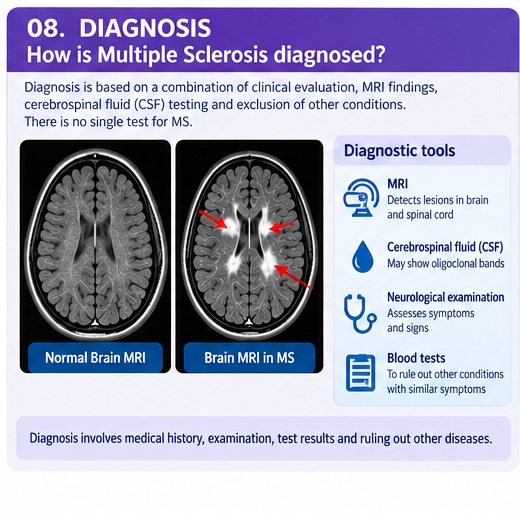
How is Multiple Sclerosis diagnosed?

Multiple Sclerosis diagnosis pathway

Diagnosis involves medical history, neurological examination and usually MRI of the brain and spinal cord. Cerebrospinal-fluid testing, evoked potentials and blood tests may help support diagnosis or exclude other disorders.

Clinical evaluation

Reduced visual acuity or abnormal color vision

Abnormal eye-movement findings

Reduced sensation

Muscle weakness

Increased muscle tone or spasticity

Abnormal reflexes

Balance or coordination impairment

Abnormal gait

Cognitive or concentration difficulties

Bladder dysfunction

Laboratory tests

Cerebrospinal-fluid analysis

CSF oligoclonal band testing

Complete blood count when evaluating alternatives or treatment safety

Vitamin B12 and other deficiency testing when clinically appropriate

Thyroid and metabolic testing when alternative diagnoses are considered

Infectious disease testing when clinically indicated

Autoimmune or inflammatory testing when another diagnosis is suspected

Other targeted blood tests to exclude MS mimics

Imaging and scans

MRI brain

MRI cervical and thoracic spinal cord

Contrast-enhanced MRI when assessment of active lesions is needed

Optical coherence tomography in selected patients

Follow-up MRI to monitor disease activity and treatment response

Special or confirmatory tests

Detailed neurological examination

Evoked potential testing

Lumbar puncture

Cerebrospinal-fluid oligoclonal band assessment

Optical coherence tomography

Functional and disability assessment

09 • DIFFERENTIAL CONTEXT

Conditions that may look similar

Neuromyelitis optica spectrum disorder

MOG antibody-associated disease

Vitamin B12 deficiency

Migraine with neurological symptoms

Stroke or transient ischemic attack

Autoimmune or inflammatory CNS disorders

Spinal cord compression

Certain infections affecting the nervous system

10 • EXTENT / STAGE

Stages or severity

Multiple Sclerosis stages

MS is not generally staged like cancer. Clinicians describe the clinical course, relapse activity, MRI activity and disability progression. Common courses include relapsing-remitting, secondary progressive and primary progressive MS.

Important:

Staging or grading systems differ between diseases. The information here is educational and should be interpreted by a qualified healthcare professional in the context of the individual case.

11 • TREATMENT

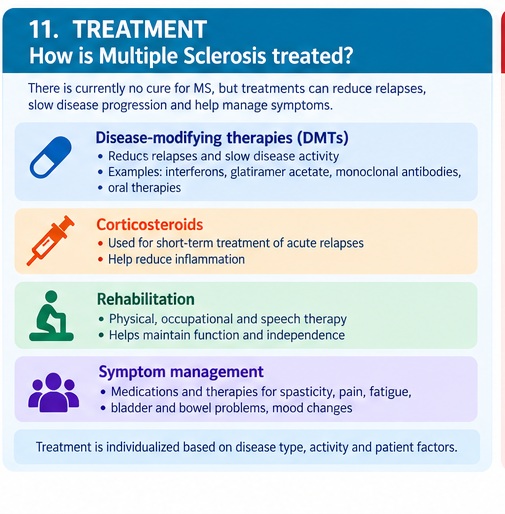
How is Multiple Sclerosis treated?

Multiple Sclerosis treatment

Treatment includes disease-modifying therapies to reduce inflammatory disease activity and relapses, corticosteroids for selected acute relapses, rehabilitation and symptom-specific treatment. The choice of disease-modifying therapy depends on disease activity and individual factors.

Medicines that may be used

Disease-modifying therapies selected according to MS type and disease activity

Interferon-based disease-modifying therapy for selected patients

Glatiramer acetate for selected relapsing MS patients

Oral disease-modifying therapies such as fumarates or other appropriate agents

Monoclonal antibody therapies for selected active MS

High-dose corticosteroids for selected acute relapses

Symptom-specific medicines for spasticity, bladder symptoms, pain or other problems

Medicine safety:

Medicines listed here are for educational information only. Do not start, stop, or change a medicine without professional medical advice.

12 • COMPLICATIONS

Possible complications

Possible complications include mobility impairment, falls, spasticity, bladder or bowel dysfunction, vision problems, cognitive changes, chronic pain, fatigue, depression and disability. Some complications require urgent assessment.

URGENT SAFETY INFORMATION

When should urgent medical help be considered?

Sudden new weakness or paralysis

Sudden facial drooping or difficulty speaking

Sudden severe loss of vision

New seizure or loss of consciousness

Severe new headache with neurological symptoms

Rapidly worsening neurological symptoms with breathing or swallowing difficulty

If symptoms are severe, rapidly worsening, or life-threatening, seek emergency medical care immediately.

13 • OUTLOOK

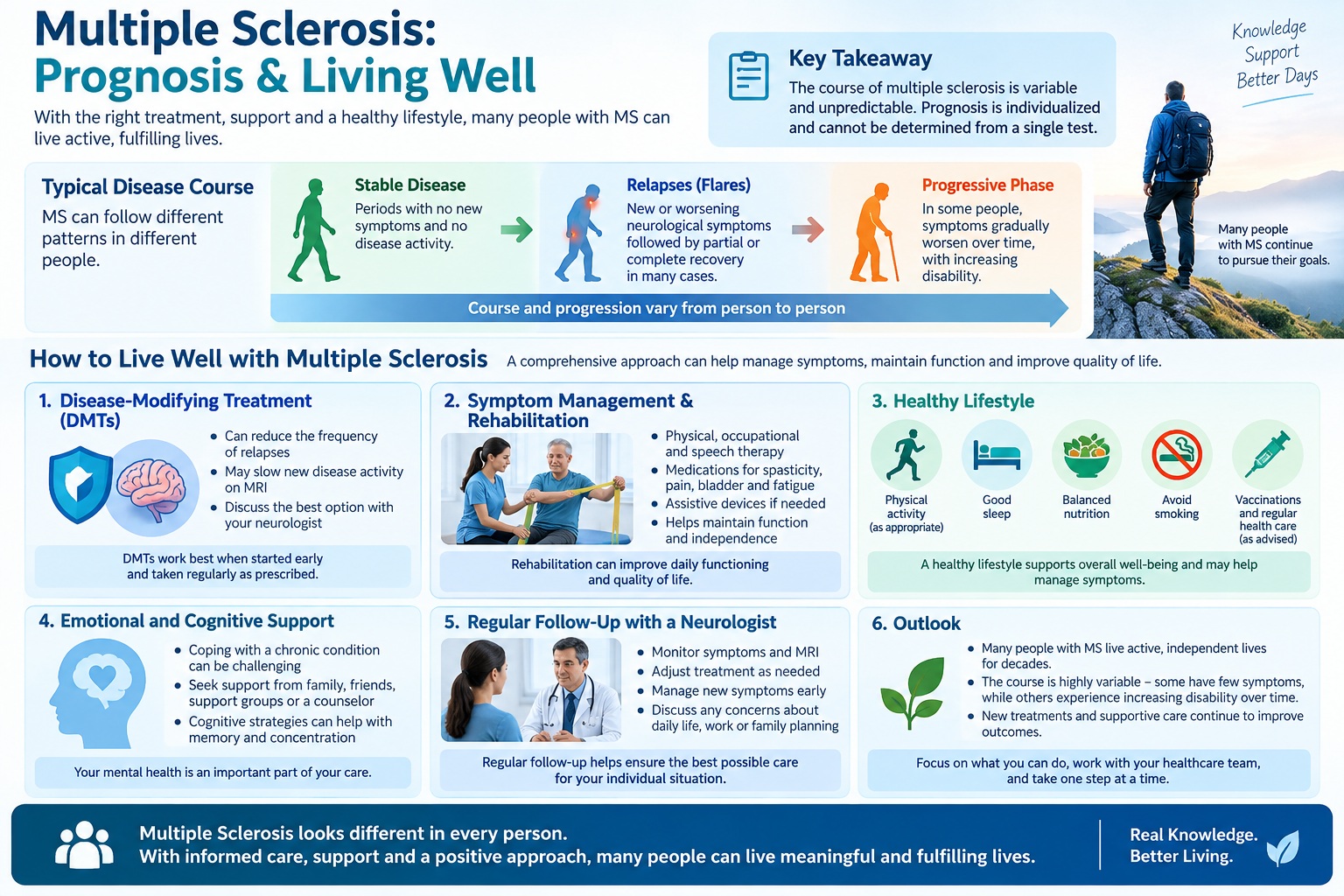
Prognosis and recovery outlook

Multiple Sclerosis prognosis

The course is highly variable. Some people remain minimally affected for many years, while others develop significant disability. Prognosis depends on disease activity, clinical course, MRI findings, treatment response and other individual factors.

How to interpret these statistics

Survival statistics describe outcomes in groups of people and cannot predict exactly what will happen to one individual. Prognosis depends on factors such as cancer stage, tumor biology, treatment response, overall health, and follow-up.

14 • EPIDEMIOLOGY

How common is it?

MS can occur at any age but commonly begins in young adulthood. It is more frequently diagnosed in women than men, and occurrence varies substantially by geographic and ancestral population.

15 • PREVENTION

Risk reduction and prevention

There is no established guaranteed prevention strategy. Avoiding smoking, maintaining general health, staying physically active and addressing modifiable health risks are reasonable supportive measures.

16 • PREPARE FOR YOUR VISIT

Questions you may ask your doctor

1

Does my clinical history meet the diagnostic criteria for MS?

2

What type or clinical course of MS do I have?

3

What do my brain and spinal MRI findings show?

4

Do I need a lumbar puncture or CSF testing?

5

Could another condition be causing these symptoms?

6

Should I start disease-modifying treatment?

7

Which disease-modifying therapy is most appropriate for me?

8

How should relapses be treated?

9

What rehabilitation or exercise program should I follow?

10

What symptoms require urgent or emergency assessment?

Important medical information

BimariDur provides educational health information to help people understand diseases, symptoms, tests, and treatment concepts. It does not replace examination, diagnosis, or treatment by a qualified healthcare professional.

Do not delay professional medical care because of information read on BimariDur.