BIMARIDUR HEALTH ENCYCLOPEDIA

Lung Cancer

Lung cancer is a cancer that begins in the tissues of one or both lungs. The two major types are non-small cell lung cancer (NSCLC) and small cell lung cancer (SCLC).

Lung Cancer anatomy
ICDC34.90
Affected areaLungs, bronchi, nearby lymph nodes and, when advanced, other organs affected by spread.
ContagiousnessLung cancer is not contagious and cannot be spread from one person to another through coughing, breathing, touch, food, or close contact.
01 • QUICK UNDERSTANDING

What is Lung Cancer?

Lung cancer develops when abnormal cells in lung tissue grow without normal control and may invade nearby tissues or spread to other parts of the body. Smoking is the major risk factor, but people who have never smoked can also develop lung cancer.
02 • BODY & MECHANISM

What happens in the body?

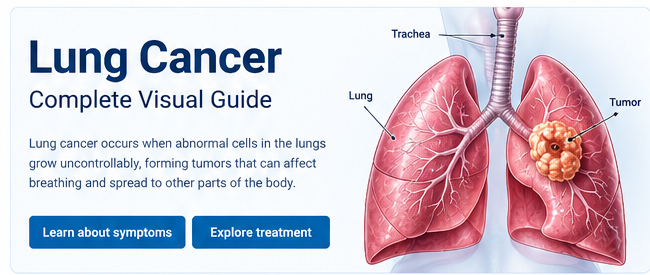
Lung Cancer anatomy illustration

Body structure involved

The lungs exchange oxygen and carbon dioxide. Air passes through the trachea and bronchi into smaller airways ending in alveoli, where gas exchange occurs.

How it starts

Lung cancer begins when cells in the lung acquire changes that allow uncontrolled growth and survival. Different lung cell types can produce different cancer types.

What happens inside the body

Genetic and cellular changes can cause lung cells to multiply abnormally. A tumor may grow within the lung, obstruct an airway, invade nearby structures, or spread through lymphatic or blood vessels.

03 • TYPES & CLASSIFICATION

Types and classification

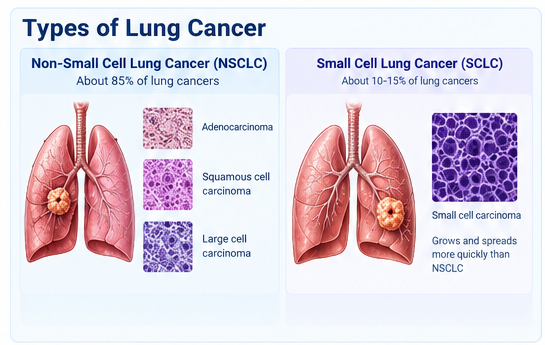
Lung Cancer classification

Classification depends on microscopic appearance, tumor biology and molecular characteristics. For some NSCLC tumors, molecular testing and biomarker testing can influence targeted therapy or immunotherapy decisions.

The two main categories are non-small cell lung cancer and small cell lung cancer. NSCLC includes major subtypes such as adenocarcinoma, squamous cell carcinoma and large cell carcinoma. These categories differ in biology and treatment.

04 • SYMPTOMS

Symptoms and warning signs

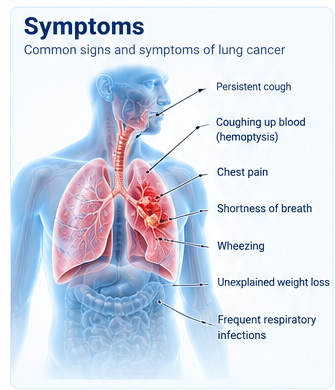
Lung Cancer symptoms

Persistent or worsening cough

Coughing up blood

Shortness of breath

Chest pain

Hoarseness

Repeated respiratory infections

Unexplained weight loss

Fatigue

Reduced appetite

05 • LESS OBVIOUS SIGNS

Signs that may be easy to miss

Early lung cancer may cause few or no noticeable symptoms. Some people are diagnosed through imaging performed for another reason or through screening when they meet screening criteria.

06 • CAUSES

What can cause this disease?

Lung Cancer causes

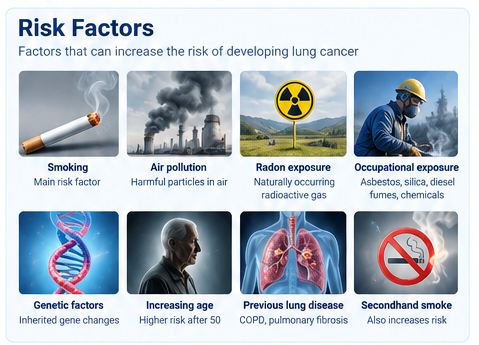
Smoking causes most lung cancers, although lung cancer can also occur in people who never smoke. Other contributors include exposure to secondhand smoke, radon, certain workplace carcinogens and some forms of air pollution.

07 • RISK FACTORS

Who may have a higher risk?

1

Current or previous tobacco smoking

2

Secondhand smoke

3

Increasing age

4

Radon exposure

5

Occupational exposure to certain carcinogens

6

Personal or family history in some situations

08 • DIAGNOSIS

How is Lung Cancer diagnosed?

Lung Cancer diagnosis pathway

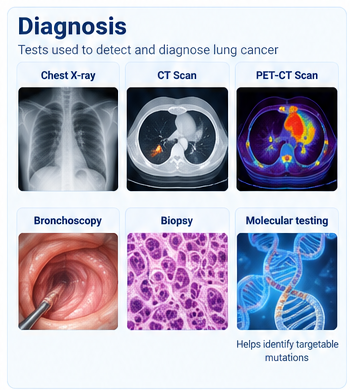
Evaluation may include medical history, physical examination, chest imaging and additional tests. A biopsy is generally needed to confirm that abnormal tissue is cancer and to determine its type. Additional molecular or biomarker testing may be used when relevant.

Clinical evaluation

Persistent cough

Unexplained coughing of blood

New or worsening breathlessness

Persistent chest pain

Unexplained weight loss

Laboratory tests

Complete blood count when clinically indicated

Blood chemistry testing

Molecular or biomarker testing when appropriate

Imaging and scans

Chest X-ray

Chest CT

PET-CT when indicated

Brain MRI or other imaging when clinically indicated

Special or confirmatory tests

Bronchoscopy

Image-guided biopsy

Pathology examination

Molecular biomarker testing

09 • DIFFERENTIAL CONTEXT

Conditions that may look similar

Pneumonia

Tuberculosis

Chronic obstructive pulmonary disease

Benign lung nodules

Other inflammatory lung diseases

10 • EXTENT / STAGE

Stages or severity

Lung Cancer stages

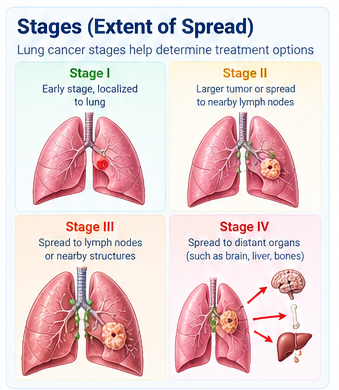
For non-small cell lung cancer, staging commonly uses the TNM system and groups disease into stages 0 through IV. Small cell lung cancer is also commonly described as limited-stage or extensive-stage disease. Stage reflects tumor extent and spread and helps guide treatment.

Important:

Staging or grading systems differ between diseases. The information here is educational and should be interpreted by a qualified healthcare professional in the context of the individual case.

11 • TREATMENT

How is Lung Cancer treated?

Lung Cancer treatment

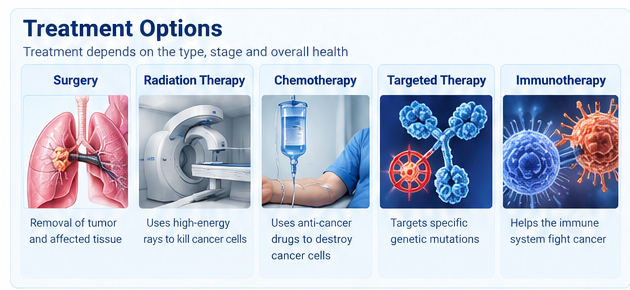
Treatment depends on cancer type, stage, molecular findings, overall health and treatment goals. Options may include surgery, radiation therapy, chemotherapy, targeted therapy and immunotherapy. Some patients receive combinations of these approaches.

Medicines that may be used

Cancer medicines are selected according to cancer type, stage, biomarkers and treatment plan.

Examples of treatment categories include chemotherapy, targeted therapy and immunotherapy.

Supportive medicines may be used for symptoms or treatment side effects.

Medicine safety:

Medicines listed here are for educational information only. Do not start, stop, or change a medicine without professional medical advice.

12 • COMPLICATIONS

Possible complications

Possible complications include airway obstruction, recurrent infections, bleeding, fluid around the lung, breathing difficulty, cancer-related pain and spread to distant organs. Treatment can also cause complications or side effects.

URGENT SAFETY INFORMATION

When should urgent medical help be considered?

Severe difficulty breathing

Large-volume or rapidly worsening coughing of blood

Severe chest pain

Sudden confusion or weakness

Collapse or loss of consciousness

If symptoms are severe, rapidly worsening, or life-threatening, seek emergency medical care immediately.

13 • OUTLOOK

Prognosis and recovery outlook

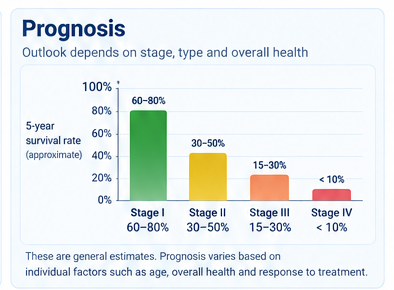
Lung Cancer prognosis

Outlook varies substantially according to cancer type, stage, molecular characteristics, response to treatment and overall health. Population survival statistics describe groups and cannot predict exactly what will happen to an individual.

How to interpret these statistics

Survival statistics describe outcomes in groups of people and cannot predict exactly what will happen to one individual. Prognosis depends on factors such as cancer stage, tumor biology, treatment response, overall health, and follow-up.

14 • EPIDEMIOLOGY

How common is it?

Lung cancer is a major cancer worldwide. In India, GLOBOCAN 2022 estimated 81,748 new lung cancer cases across both sexes.

15 • PREVENTION

Risk reduction and prevention

Risk reduction focuses strongly on tobacco avoidance and cessation, reducing secondhand smoke exposure and minimizing avoidable occupational or environmental carcinogen exposure.

16 • PREPARE FOR YOUR VISIT

Questions you may ask your doctor

1

What type of lung cancer is present?

2

What is the stage?

3

Is biomarker testing appropriate?

4

What treatment options are available?

5

What side effects should be reported urgently?

17 • FAQ

Frequently asked questions

Can lung cancer occur in someone who never smoked?
Does a lung nodule always mean cancer?
Is a biopsy always needed?
Can lung cancer be treated?

Important medical information

BimariDur provides educational health information to help people understand diseases, symptoms, tests, and treatment concepts. It does not replace examination, diagnosis, or treatment by a qualified healthcare professional.

Do not delay professional medical care because of information read on BimariDur.